Multi-Seller Bag Orders: Consolidate in China or Ship Separately?
A small boutique order rarely comes from one seller. A tote from one shop, a crossbody from another and a clutch from a third is a normal first assortment. Once those parcels reach the China-side warehouse, the question is whether to wait and combine them or to release them as they are ready. This guide summarizes how 1688 Bags suggests making that call.

AI illustration of fashion handbags sorted into three groups beside open cartons. Image: 1688bags.com.
Consolidation is a choice, not a default saving
The site's multi-seller consolidation guide opens with a clear statement: consolidation can simplify a multi-seller shipment, but it is not automatically cheaper or faster. The comparison has to include packed dimensions, weight, handling charges and waiting time for both options, plus a decision about what happens if one seller is late.
Its worked example shows why. Two cartons of 40×30×30 cm at 5 kg each have a dimensional weight of 7.2 kg each at an assumed divisor of 5000, or 14.4 kg together. A single combined carton of 60×40×35 cm at 10 kg comes to 16.8 kg. In that example, combining raises the weight basis. It may still reduce other fees, but those need a quote. The guide stresses that the carton sizes are editorial assumptions and not a rate or a promised route.
When each option tends to fit
The guide gives a side-by-side view that is useful as a checklist:
- Consolidate when all sellers can meet the agreed warehouse cutoff; products can share protection without crushing; the complete quote is acceptable; and one recipient and destination suit the shipment.
- Consider separate release when one parcel would hold up time-sensitive stock; structured bags need incompatible packing; or extra handling or volume changes the comparison.
- Confirm before deciding arrival status and the latest release date, the packing layout and approval photos, and which fees are included, excluded or pending.
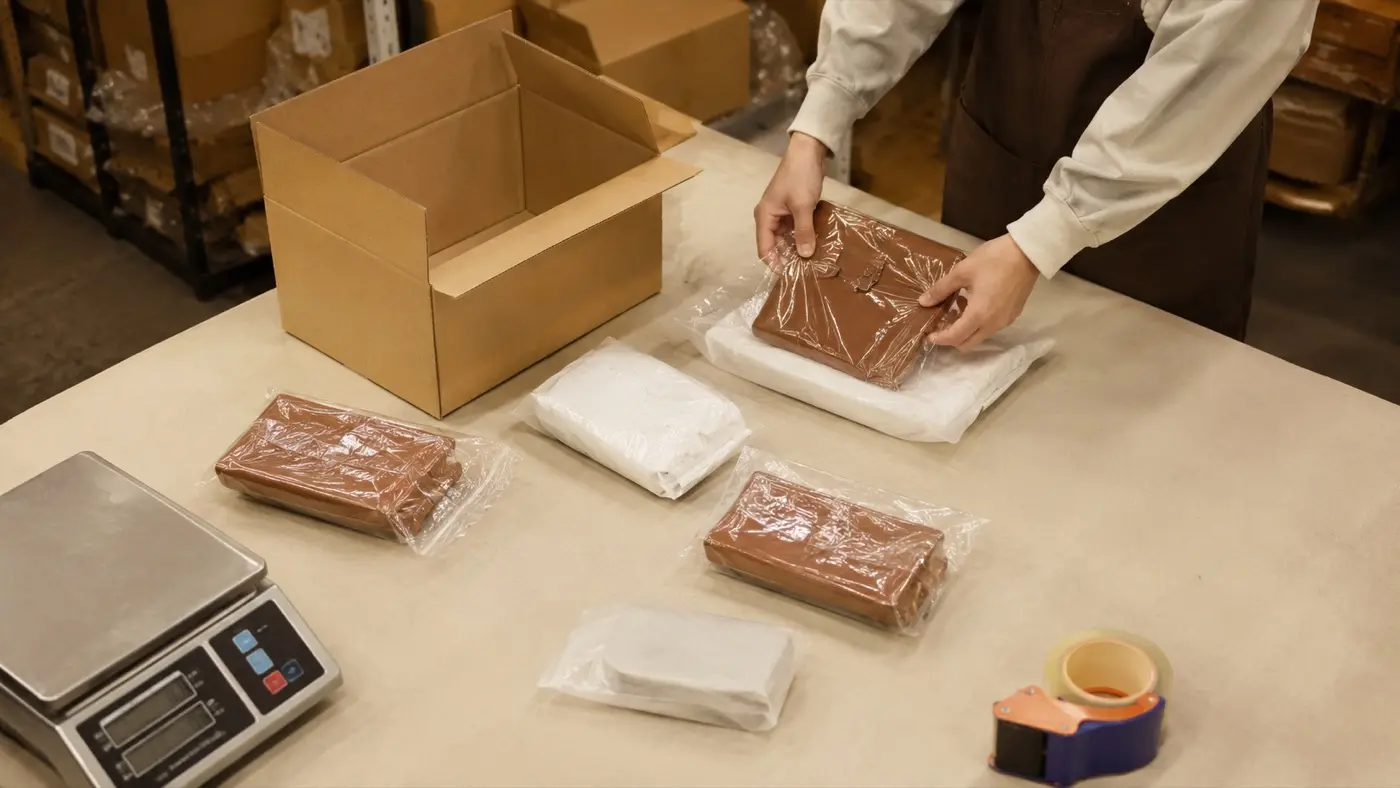
Illustration of the consolidation step where parcels from several sellers are combined. Image: 1688bags.com.
Compare like with like
The consolidation guide asks for two options built on the same SKU quantities, delivery address and packing protection: one consolidated shipment and one with separate releases. China domestic freight, receipt handling, storage if applicable, QC, repacking and international charges should all stay visible. As on the site's pricing page, unknown charges stay pending, not zero.
A rate based on one measured carton cannot be fairly compared with another option based on seller parcels that were never measured. Ask which figures are estimates and which have been measured, how chargeable weight is calculated for each route, and when the quote expires.
Set a rule for the late seller
The most common problem in a multi-seller order is not cost but timing. One seller ships promptly; another is still waiting on stock. The site's shipping policy describes the stages an order passes through, from confirming availability and buying from an approved source, to receiving at the China-side workflow, inspecting, repacking and arranging export delivery, and it does not promise a fixed processing time.
That makes an exception rule valuable. The sourcing brief template includes a release rule line: hold if a seller is late or QC differs, and ask before a split shipment. Writing that rule before you buy means the desk knows whether to wait, to ship what is ready, or to ask you, instead of guessing.

Flow from Taobao purchase through QC to DDP delivery. Image: 1688bags.com.
Review QC and packing before the cartons close
Consolidation is also the last moment to see every item before it is hidden in a carton. The site's small-order packing guide recommends checking whether different bag structures can safely share a carton and reviewing QC before packing conceals the details. The QC inspection page lists packing compression as a risk and suggests before-and-after packing photos where shape matters.
Keep in mind one point from the site's MOQ guidance: consolidating parcels does not combine different sellers' minimums. Each seller's minimum quantity still applies to its own listing, even if everything ends up in one carton.
Finally, think about the destination side. If your route is DDP, the DDP shipping page says the route is reviewed per destination and goods, using inputs such as quantities, postal code, packing preferences and weight and dimensions. A change from separate parcels to one consolidated shipment changes those inputs, so the route quote should be reviewed again for the option you choose.
It also helps to decide in advance how you want to be told about status. A short note when each seller's parcel arrives, and a summary before the final carton is packed, gives you a clear point to confirm the release. The site's policies say replies come within two business days, so building that into your own planning avoids surprises near a launch date.
Finally, keep the decision record. Note which option you chose, why, and how the final packed shipment compared with the quote. The next multi-seller order will then start from evidence rather than from a guess about whether consolidation helped last time.
FAQ
Is one consolidated shipment always cheaper?
No. The site's example shows a combined carton with a higher weight basis than two separate cartons. Compare full quotes for both options.
What if one seller is late?
Agree a release rule in advance, such as holding the order or asking before a split shipment, so the warehouse knows what to do.
Does consolidation let me combine sellers' minimum quantities?
No. The site notes that consolidation does not combine different sellers' minimums.
Buying from several sellers? Send the links and your release rule through the sourcing request page.
Contact 1688 Bags: email sales@1688bags.com · 1688bags.com